

Test-Pieces

The Test Pieces for the 2013 National Finals

Three proven works and two new ones to the contest scene have been selected for the 2013 National Finals by the Music Panel of the National Championship

CHAMPIONSHIP SECTION

Of Distant Memories  (Music in an Olden Style) by Edward Gregson
Published by Novello  (distributed Studio Music Co.)
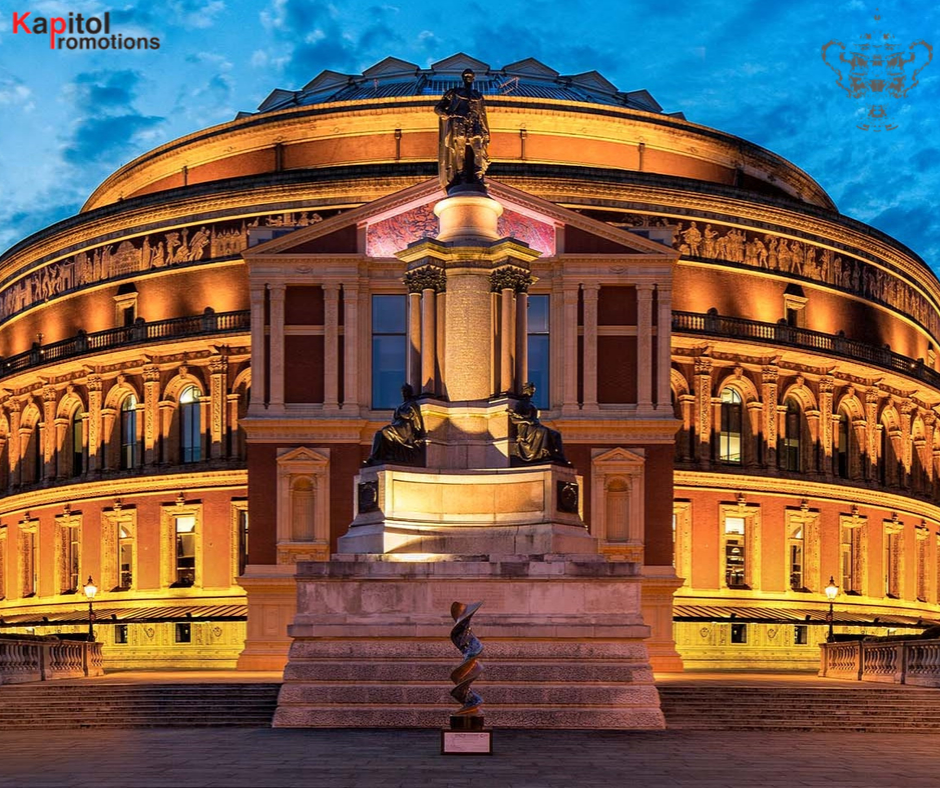
Professor Gregson has been commissioned jointly by Kapitol Promotions, Black Dyke and the Worshipful Company of Musicians for the Royal Albert Hall Final challenge, which pays homage to, initially, the first original work written 100 years ago by Percy Fletcher for brass bands - Labour and Love. Gregson’s new work then honours some of the greatest test-pieces of the early 20th Century that are held in high esteem and have had a significant impact on brass band repertoire. Said Alan Hope of the Music Panel: “It’s a coup for the ‘National’ to again present a piece by the eminent composer, Edward Gregson and we are confident that this particular piece will be a massive success, both in terms of challenge and enjoyment, for the Royal Albert Hall occasion.”

SECTION 1

Fanfares and Love Songs by Gavin Higgins
Published by Faber Music
The hugely successful young composer, Gavin Higgins, has penned the other another new work for this year’s Finals. Commissioned by the National Children’s’ Band of Great Britain in 2009 and first performed by Leyland Band in the RNCM Festival of Brass of 2010, Alan Hope observed: “It’s exciting, with a wonderful middle movement and an energetic finale.”

SECTION 2

Purcell Variations by Kenneth Downie
Published by Egon Music
Written in 1995 and used in the Regional Section 1 contests of 1998, Purcell Variations was an instant success. Taken from the hymn, Westminster Abbey, it comprises an introduction and four variations. “We are delight to use this wonderfully melodic work once more,” said Alan Hope. “It’s already proved to be very successful and popular with bands, and we feel sure that its inclusion in the 2013 Finals music selection will be no exception.”

SECTION 3

Penlee by Simon Dobson
Published by Faber Music
Simon Dobson wrote this popular work in 2009 as a descriptive work of the 1981 Penlee lifeboat and the new cargo ship the Union Star tragedy, in which both vessels and their crews were lost in a storm. Said Alan Hope: “We are certain that bands and audiences will be moved by this wonderful, but tragic work.”

SECTION 4

A Malvern Suite by Philip Sparke
Published by Studio Music
Written in memory of composer, Gordon Jacob, and originally used for the Regional contests of 1985, this three-movement suite evoking the Malvern Hills is crafted to the high standards anticipated from Philip Sparke. The three movements are Worcester Cathedral, The Wye at Hereford and the busy and bustling finale Gloucester Market. Said Alan Hope: ”It’s a very audience-friendly work that bands should also enjoy rehearsing.”


The test-pieces for the 2011 National Championships

CHAMPIONSHIP SECTION

Breath of Souls by Paul Lovatt-CooperPublished by PLC Music.

SECTION 1

La Force Del DestinoBy Verdi Arranged by Frank Wright.Published by Studio Music.

SECTION 2

Portrait of a CItyBy Philip SparkePublished by Anglo Music.

SECTION 3

Darkness VisibleBy Richard GranthamPublished by Lake Music

SECTION 4

Henry the FifthBy Vaughan Williams edited by Roy DouglasPublished By Studio Music.

2010 British National tests announced
The Music Panel of the National Brass Band Championships of Great Britain has announced the test-pieces for the 2010 Finals as follows:
Written and issued by Alan Hope,
Music Panel Secretary

CHAMPIONSHIP SECTION

Terra Australis
By Martin Ellerby
Published by Studio Music Ltd.
Written in 2005, the work was commissioned by the Yorkshire Building Society Band for its tour of Australia the same year.
Its world première was in Sydney Opera House and its first performance in the UK was given by the YBS Band, under Professor King, at the RNCM Festival of Brass in 2006.
A descriptive work in one continuous movement, Terra Australis portrays the discovery of Australia, the wonders of the land, the promise of new life and the nation’s anthem, closing with a massive grand chorale and an energetic conclusion. Written as both a concert and contest work, it should prove popular with performers and audiences.
For the purposes of the 2010 National ‘Final’, the Music Panel asks bands to note that the cadenza section between rehearsal letters ‘T’ and ‘U’, will be played as per the composer’s instruction on the score.

SECTION 1

Diversions on a Bass Theme
By George Lloyd
Published by R. Smith & Co.
This is the second by work by George Lloyd in the 2010 Championship series – his work, English Heritage, was set as the top section test in the recent 2010 ‘regional’ qualifying contests for the ‘Nationals’.
Diversions on a Bass Themewas last set in the Regional Championships of 1987 and was originally commissioned by the brewer, Bass North Ltd., for the 1986 Mineworkers’ National Brass Band contest.
Of this technical yet lyrical work, the composer explains: ‘Traditionally, variations are when a given tune is treated in a variety of ways. In this work, the pattern is made the other way round in that a number of tunes grow out of the opening bar and which provide the motif for the whole work.’

SECTION 2

Psalms and Alleluias
By Philip Wilby
Published by Kirklees Music
One of Professor Wilby’s most recent works, Psalms and Alleluias was commissioned in 2008 for the National Children’s Band of Great Britain and also selected as the Section 2 test-piece for the 16th World Music Contest in Kerkrade of 2009. It contains two contrasting musical styles; the lyrical psalm melody, with its big sounds and broad phrasing, contrasting with the energetic and busy breathless alleluia.

SECTION 3

Willow Pattern
By Philip Harper
Published by Harper Music
A new work from the pen of the prolific Philip Harper tells the story of the willow pattern legend, made famous in the West, of course, by becoming one of the most used illustrations on chinaware.
The music leads through the famous love story depicted on the chinaware and is full of emotion, sadness and ecstasy, the main characters being depicted musically by the flugel horn, the euphonium, Eb Bass and trombone. The story and the work climax in the eternal happiness of the lovers’ transformation into two turtledoves soaring above the earth.
The work was first performed at the Black Dyke Festival in May last year.

SECTION 4

A Royal Mile Suite
By Alan Fernie

Published by Kirklees Music
Never previously used as a National Championship test-piece, the work is descriptive and cast in four entertaining movements, each portraying different characteristics of Edinburgh.
A test for the full band, demanding as it does technique from every player, it will provide what the Music Panel’s Secretary, Alan Hope, describes as “an excellent test of lyricism and rhythmical playing, including the typical rhythms of Scottish dances.”


The test-pieces for the 2009 National Finals

CHAMPIONSHIP SECTION

The Torchbearer – Symphonic Variations on a Theme by Eric Ball
By Peter Graham
The two organisations that respectively present the National Brass Band Championships of Great Britain and the Australasian Open Competition have joined forces to commission the first joint Championship Section test-piece for both events.
David King - 20090217100752.jpg
Professor David King
Professor David King (above) has spearheaded the artistic collaboration on behalf of Kapitol Promotions in the UK and the Federation of Australasian Brass Bands (FABB). The result will be The Torchbearer – Symphonic Variations on a Theme by Eric Ball, commissioned from the popular and eminent composer, Professor Peter Graham.
Talking about the background behind his inspiration for the piece, Peter Graham commented: “Some 20 years after his death, in October 1989, Eric Ball is still considered to be one of the most influential figures in the short history of the brass band, as the composer who bridged the gulf between old and new repertoire.
“At a time when transcriptions and arrangements formed the backbone of many band programmes, Ball produced a series of original works that went some way to giving brass band composition confidence and integrity. In his early years, as a full-time Salvation Army musician and in SA terms, he was considered something of a revolutionary, his work generally displaying a higher level of sophistication and technical awareness than those of his contemporaries.
“The Torchbearer reflects upon these aspects of Ball’s compositional style and, for those well versed with his music, the sound world evoked will be familiar territory. The work is based upon the trio theme from Ball’s SA Torchbearers March, which demonstrates many of the composer’s characteristics – lyrical melody, the rising figure peaking at the interval of the 6th, tonal harmony and so on. As the variations progress, the theme undergoes a series of metamorphoses, which mirror in music a concept very much at the centre of Ball’s broader philosophy - that of transformation.”
This will be the second time that a Championship Section test-piece from the pen of Peter Graham has been commissioned for British National Championships. His work, Harrison’s Dream, was an outstanding success when it was set in Millennium year and was described as ‘…an absolute knockout’ by American Record Guide.
Philip Morris - 20090217101109.jpg
Philip Morris
Speaking about the collaboration, Philip Morris (above) of Kapitol Promotiona, which presents the British ‘National’, enthused: “It’s very exciting to have a test-piece written by a composer of Peter Graham’s international stature, as well as to collaborate with the Federation of Australasian Brass Bands - we’re sure that this new work will be enjoyed by both bands and audiences.”
He added: “I’d also like thank David King, who inspired this joint artistic venture between our two countries, thousands of miles apart. It was an innovative and creative move, and one that Kapitol hopes to repeat in the future with another organisation.”
Chairman of the Federation of Australasian Brass Bands, Rick Casagrande, also commented: “I would like to thank the Music Advisor of FABB, Professor David King, for initiating this joint commission with Kapitol Promotions in the UK.
“The opportunity of having the internationally acclaimed composer, Professor Peter Graham, linked with FABB, is a real honour for the organisation and we look forward to welcoming him to our shores as distinguished guest for the Southern Hemisphere premiere of ‘Torchbearers’ at this year’s Australasian Open.”
The work will receive its British ‘National’ premiere on 17 October at the Royal Albert Hall, London and its Australasian ‘Open’ premiere on 24 October at Tweeds Heads, Gold Coast, Australia.
Details of the publisher of 'Torchbearers', plus the date when the piece can be bought, will be posted first on this website.

About Peter Graham

PeterGraham.JPG - 20090430094046.jpg
Professor Peter Graham
Performers and audiences alike celebrate Peter Graham's work; the Times newspaper hailed Cry of the Celts as ‘…an extraordinary arrangement, exuberant, extrovert. His arrangements and orchestrations have been performed on most British TV and radio stations, as well as frequently on BBC TV’s Songs of Praise. He has written for, and collaborated with, some of the world’s leading performers including Karl Jenkins (as co-arranger and orchestrator on the EMI album, This Land of Ours), Evelyn Glennie (as composer and orchestrator on the Grammy-nominated BMG Classics/RCA album,Reflected in Brass), The Beautiful South (as brass orchestrator on the Universal/Mercury album, Painting it Red) and Peter Gabriel. He was also brass orchestrator on the Universal album, Together, featuring The International Staff Band and Lesley Garrett, nominated as Album of the Year at the 2009 Classical Brit Awards.
Composing for all levels of brass band, from educational concert music to the most demanding test-piece, Peter Graham’s music has been performed in every major brass band competition worldwide. His compositions have been variously performed across the globe, from China, Japan, Korea and Singapore in the Far East, to every major European country. Performers have included the Royal Philharmonic, New Zealand Symphony, Rotterdam and White House orchestras, the Royal Concertgebouw, the Philharmonic Orchestra Brass, the Osaka Municipal Symphonic and United States Air Force bands, as well as the Tokyo Kosei Wind Orchestra. Moreover, he has arranged for various ensembles, from the fanfare bands of the Benelux countries to the marching bands of America. The famous Blue Knights Drum and Bugle Corps’ most successful show to date,Colors of Brass and Percussion, was built entirely around his compositions The Essence of Timeand Montage. As a former Composer-in-Residence to the Coldstream Guards Band, Professor Graham was presented to Her Majesty Queen Elizabeth and the Duke of Edinburgh, and his music was represented at a private Royal Command Performance in Windsor Castle.
Peter Graham’s music has also won many prizes; in 2002 he became the first composer outside the USA to win the American Bandmasters Association/Ostwald Award for Original Composition for Symphonic Winds.

SECTION 1

Triumphant Rhapsody
By Gilbert Vinter
Published by Studio Music
This, the fourth of Vinter’s works for brass, was used as the test-piece for the Championship Section National Final in 1965.
The work contains some of Vinter’s most complex writing and is an exploration of the interval of a 2nd, examples of which occur many times throughout the work.
It is often thought to be the first work that Vinter wrote for brass band, as opposed to writing orchestral music for brass band.
Said Alan Hope: “The Music Panel felt that choosing this work is a fitting end in 2009 to the contest tributes in this, the 100th anniversary of Vinter’s birth and the 40th anniversary of his death.”

About Gilbert Vinter

Vinter0001.jpg - 20090601183138.jpg
Gilbert Vinter was born on 4 May 1909 in Lincoln. He played bassoon in the BBC Wireless Band and the London Philharmonic Orchestra, and taught at the Royal Academy of Music. During World War II, he was a member of the Royal Air Force Central Band and later served with several RAF bands. After the War, he was Staff Conductor with the British Broadcasting Corporation and many of his works were written for brass band. Among his finest works was The Trumpets, which is scored for a large brass band, chorus and bass soloist.
Vinter died in Tintagel, in Cornwall, on 10 October, 1969.

SECTION 2

A Scot's Miscellany
By Alan Fernie
Published by Obrasso-Verla
g
Commissioned for the forthcoming Bernese Kantonal in Switzerland – a local competition – it was first played by Newtongrange Silver Band at last year’s West Lothian Challenge.
The work comprises three linked movements, each of which reflects facets of Scottish life.
The first, The Smiling School for Calvanists, is what’s known, north of the Border, as a pessimistic Dreich march and refers to some of John Knox’s teachings, as well as his devotion to the Calvanist religion. As would be expected, the mood of this movement is serious, severe and dour.
‘Regards to G. Robin Henderson Esquire of Caithness’ is a slow movement, based on the lovely hymn tune, St. Anne,and dedicated to this true gentleman of the McTaggart-Scot-Loanhead Band.
The finale is a typical Scots reel, John Whyte’s Reel, dedicated to a multi-talented musician friend of the composer.
Said Alan Fernie: “You could say that the last movement is a tribute to two of my favourite composers, John Adams and Malcolm Arnold.”
Also commenting, Alan Hope enthused: “The Panel is delighted to select this new work. We feel that there is much in it to both interest and tax the bands in this Section.”

About Alan Fernie

Alan Fernie - 20090601174955.jpg
Alan Fernie was born in the Scottish mining village of Newtongrange. At the age of 13, he learned to play trombone, both at school and with his local brass band.
After studying music in Glasgow and London, Alan Fernie spent a short period as an orchestral musician before transferring instrumental education. He taught in schools all over the East of Scotland for 20 years, during which time he has also conducted bands at all levels, winning many awards.
Alan Fernie started writing for brass whilst still a student, and his music is now published, performed and recorded throughout the world.
Currently living in the Scottish Borders, he is principally a composer but also finds time to conduct, teach, perform, adjudicate, lecture and compere, throughout the UK and beyond.

SECTION 3

Oceans
By Goff Richards,
Published by Studio Music
Oceans was commissioned in 1984 with valuable support from South-West Arts for the 60th Anniversary of the West of England Bandsmen’s Festival. It has been used as a test-piece in the ‘National’ Series before, as the test for the 2ndSection Regional Championships of 1994.
Announcing the piece, Alan Hope, enthused: “We are pleased to select this wonderful music and wish it to be regarded as a tribute to the work that Goff Richards has produced for the brass band movement over many years.”

About Goff Richards

richards_goff.jpg - 20090601175106.jpg
Born in Cornwall, Goff Richards studied at the Royal College of Music and Reading University before embarking upon a career as a composer, arranger and conductor.
His works have been performed by the King’s Singers, the Swingle Singers, various BBC orchestras, Huddersfield Choral Society, London Brass, Evelyn Glennie, Benjamin Luxon, and leading brass and military bands, as well as extensively broadcast on BBC Radio and television.
He has been commissioned by the BBC’s Festival of Cornish Bands, television's Songs of Praise (which included special orchestral arrangements for the 40th Anniversary Concert at the Royal Albert Hall), the 2002 Manchester-based Commonwealth Games, the Trevithick Day celebrations in Cornwall (Mythic Trevithick), Huddersfield Choral Society (Counting the Days to Christmas),Reading Phoenix Choir (Sweet Thames Suite), Tokyo (Vivid Colours for Vivid Brass), the opening concert at the new Hall for Cornwall (Intrada, performed by Bournemouth Sinfonietta), Grimethorpe Colliery Band, Tori Amos and the Albion Band.
In 1982, the St. Austell Band released an LP of Goff Richards’ music, since when BNFL, Brighouse and Rastrick and Foden’s bands have each produced CDs featuring his music. A recording by his own ensemble, The Arcadians, together with singers Margaret Richardson and Paul Whelan, was also released.
This prolific composer also worked within music education between 1976 and 1989, his remits including lecturing in arranging, as well as directing the Jazz Orchestra at Salford College of Technology. In 1990, Salford College awarded him an Honorary GDBM and the title, Director Big Band Laureate, in recognition of his contribution to band music throughout the world. After 1992, he directed the Jazz Orchestra at Chetham’s School of Music, Manchester, and also composed large-scale works for Barnsley Schools (The River of Time) and the East Ayrshire Schools Brass Band and Choir (A String O’Blethers), both produced in the year 2000.
Goff Richards has adjudicated various the Regional and ‘National’ Finals, the European, Australian, New Zealand and Dutch Brass Band championships; Norway’s SIDDIS Brass, the National Male Voice Choir Championships of Great Britain and numerous other brass band contests for BBC Radio and television.
The Cornish Gorsedd made Goff Richards a bard in 1976.

SECTION 4

Alta Vista
By Bruce Fraser
Published by Studio Music
Alta Vista is a new work from the pen of another Scot, Bruce Fraser. Literally meaning ‘a view from above’, it is a modern descriptive work in three movements, each depicting one of the three tallest buildings in the North American continent, as follows:
The CN Tower - the composer’s view of this enormous building in Toronto is a pulsating, driving movement, which shows the power of such a mighty structure.
The Empire State Building, New York - this is more complex, rhythmically, offering more of a technical challenge to players and conductors. Some very delicate and open scoring brings this to a quiet close.
Sears Tower in Chicago, Illinois - this was the tallest building in the world, when it was constructed in 1973. The movement is largely an allegro vivace in ¾ and has busy passages for some cornets, horn and euphonium, all creating the impression of the business and hurried life taking place in this amazing building.

About Bruce Fraser

Bruce Fraser 2_2.JPG - 20090601185125.jpg
Bruce Fraser has established a reputation as a multi-faceted composer. His music publishing Company, Lomond Music, offers a range of titles for young brass and wind bands, test-pieces at most levels and a range of arrangements for the Swiss publishers – Obrasso, Difem and Musikverlag Frank.
A vast number of other his titles for wind band are published mainly by G&M Brand, Studio Music, Edition Wicky, TRN and Gobelin Music. Bruce Fraser has also composed many commissions for a variety of groups including a Concerto for Trumpet and Orchestra, written for John Wallace and the Fife Youth Orchestra, Sun for BBC Young Brass player, Katrina Marzella, Tuba Concerto for James Gourlay and a recent work for Adam Frey in USA. The Concerto exists in various accompaniments – brass band, concert band, ten-piece brass ensemble, orchestra and piano, also available from Studio Music, London. His work, Hellas, for trombone and piano, was the set piece for the British Trombone Society competition for young players, won by Hayley McConnell of Durham and he was commissioned to write Twin Slides for Brett Baker, Principal Trombone for Black Dyke Band. Both are available from Studio Music.
As a conductor, Bruce Fraser has been conducting brass bands, choirs and wind bands for over 30 years. He has also adjudicated many music festivals, brass band competitions and wind band festivals throughout the UK and Europe. His career as a composer, conductor and adjudicated really developed following his early retirement as Head of Music at Buckhaven High School, in 2007. The same year saw his composition, Imperium, selected as the 3rd Section National test-piece.
Bruce is delighted that Alta Vista has been selected as the 4th Section test-piece at the 2009 Lower Section Finals and hopes that bands enjoy working on it.

The test-pieces for the 2008 National Finals

CHAMPIONSHIP SECTION

Concertino for Brass Band
By Kenneth Downie
Published by Kantaramusik. On sale through Salvationist Publishing and Supplies (SP&S) from 2nd July, 2008.
Introduced by the composer, Kenneth Downie
In 2007, I was commissioned by Geo-Pierre Moren and the Swiss Brass Band Treize Etoiles to write a work for their own-choice contribution to the Swiss National Championships. The result was the Concerto for Brass Band, a four-movement work lasting about 18 minutes, with which the band won the Own-choice Section. It was subsequently suggested to me that it might be suitable for consideration as the Championship Section test-piece for the National Final in the UK. Time constraints proved to be an obstacle, however, with the ideal time for such a test-piece being only 12 minutes.
A solution to this problem came when I felt that it would be possible to consider the work as one in three-movements, without the original second movement scherzo. The revised Concertino for Brass Band now has a different shape, with the slow Lento espress at the heart of the music. All this is purely academic to the majority of listeners, who have not heard the music in its original format. However, I do believe that the ‘new’ piece, although in a different shape, has a convincing balance and it is my intention to publish the scherzo as a separate movement, to be performed either on its own or as part of the larger Concerto for Brass Band.
The style of the title accurately suggests a piece of absolute music, as opposed to programme music. The use of the term ‘concerto’ is in recognition of the degree of virtuosity required, which is in line with the terms of the original commission. Technical skill is never showcased for its own sake, however, but is always subservient to the musical argument.
On a visit to Switzerland, shortly before writing this music, I was greatly taken by the large and weighty sound routinely produced by horn and baritone players during a solo competition at Sion. I found it very attractive, more in line with the kind of sound produced by orchestral French horn players and it certainly influenced my writing. Speaking personally, I find that a sonorous, fulsome sound from the middle of a band produces a mixture that is more satisfying to my ear.
Listeners will no doubt detect a variety of musical influences, real or imagined! My admiration for the music of the late Wilfred Heaton is probably evident in the first movement, whilst the second movement contains the emotional heart of the music, providing scope for expressive ensemble and solo playing. The finale should be dynamic and full of restless energy. A final slowing down of tempo and the reprise of the opening theme from the first movement leads into a climactic coda.
A score sample is available here.
A look at the composer, Kennneth Downie
Kenneth Downie - 20090219103645.jpgKenneth Downie was born in Glasgow in 1946 and educated in Scotland, Manchester and Durham. He holds the degrees of Bachelor of Arts and Doctor of Musical Arts.
After leaving university, he became a specialist music teacher in schools before, in 1976, finally leaving his position as Head of Music at Poole Grammar School to go into the jewellery business. 1998 saw the start of a return to his musical roots when he accepted an invitation from Professor David King to become the first-ever Composer-in-Residence to the then Yorkshire Building Society Band. This six-year period proved very productive and involved many concerts, broadcasts and recordings.
In July 2001, Kenneth Downie was appointed Creative Music Consultant to the Salvation Army, working closely with Dr. Stephen Cobb in the Music Ministries Unit, in London. In that capacity, he has special responsibilities for contributing to the whole range of Salvation Army brass and vocal repertoire, reviewing submissions for publication consideration and also for developing the talents of other writers. A considerable amount of new music has followed, much of it for The International Staff Band and Songsters.
2001 Kenneth Downie and his wife, Patricia, established the music publishing company, Kantaramusik. They currently live in Winchester and are very active in the Salvation Army Church.
Kenneth Downie’s compositions are frequently performed at contests and concerts around the world. Recent commissions include the test-piece and own choice-sections for the European Brass Band Championships, the Swedish and Dutch national championships, and the British Open Championship. In the last few years alone, Kenneth Downie’s music has received premieres in the Royal Albert Hall in London, the Royal Concert Hall in Glasgow, the Waterfront Hall in Belfast, and in Symphony Hall, Birmingham.
Kenneth Downie feels particularly honoured that, in 2008, his composition, St. Magnus was chosen by the brass band Association in his native Scotland, as the test-piece for the Scottish Championships, as well as that his Concertino for Brass Band has been selected as the test-piece for the Championship Section of the National Championships in the Royal Albert Hall, London.
Kenneth Downie is also honoured to be the Guest of Honour at the Swedish Championships in November, where all sections will be performing his music.

SECTION 1

The Saga of Haakon the Good
By Philip Sparke
Published by Anglo Music, distributed by De Haske.
Introduced by the composer, Philip Sparke
The Saga of Haakon the Good was commissioned by Frei Hornmusikk from Norway to celebrate the joining of the two neighbouring Kommuner of Frei and Kristiansund, which took place on 1 January 2008. The band used it as its test-piece in the Norwegian National Brass Band Championships the following February.
The piece traces key events in the life of Haakon the Good (circa 920 –961), later to become King Haakon 1 – The Future King - who had been fostered by King Athelstan of England as part of a peace agreement made by his father.
The English king brought him up in the Christian religion and, on the news of his father’s death, provided him with ships and men for an expedition against his half-brother, Eirik Bloodaxe, who had been proclaimed King of Norway.
On his arrival he travelled north – The Journey to Tronheim -where he began to gain the support of the landowners by promising to give up the rights of taxation that his father had previously claimed.
Eirik’s sons allied themselves with the Danes but were invariably defeated by Haakon, who was successful in everything he undertook, except in his attempt to introduce Christianity to the country – The Missionary King - which aroused an opposition that he did not feel strong enough to face.
One of his most famous victories was The Battle of Rastarkalv (near to Frei) in 955. By placing ten standards far apart along a low ridge to give the impression his army was bigger than it actually was, he managed to fool Eirik’s sons that they were out-numbered. The Danes fled and were slaughtered by Haakon’s army. These ten standards are represented by ten loud chords starting in bar 420.
Listen (MP3 Format)
Philip Sparke - 20090219103625.jpg
Composer Philip Sparke
Contact details for De Haske (UK) Ltd.:
De Haske (UK) Ltd.
Fleming Road,
Earlstrees,
Corby.
NN17 4SN.
England.
Telephone: 01536 260981
Fax: 01536 401075
E-Mail: music@dehaske.co.uk
Recommended recordings of The Saga of Haakon the Good
To order, contact World of Brass Mail Order Department
Telephone: 01933 445 445
1. Music for Battle Creek, Black Dyke Band
Catalogue reference: 24933
Music for Battle Creek, Black Dyke Band - 20090219103602.jpg
Click here to buy this recording

SECTION 2

Rhapsodic Variations - My Strength, My Tower
By Dean Goffin, adapted by Brian Bowen
Published by SP&S
The music consists of a theme, followed by five extensive variations
The theme is the composer's own tune is set to the words: ‘Thee will I love, my strength, my tower', which is Johann Scheffler’s hymn, translated by John Wesley.
A strong modal flavour is characteristic of the theme and Brian Bowen has prepared this ‘contest’ version.
It differs from the original in that a repiano cornet part has been created and percussion parts modernised.

Variation 1
This is a light and graceful variation with a good deal of imitative writing. It leads, without a break, into the next variation.

Variation 2
Fire and ferocity are asked for in the course of this variation.

Variation 3
This variation demonstrates the original approach of the composer. Solo lines for cornet and euphonium are included with their arabesques and arpeggii.

Variation 4
Taking the form of a passacaglia, the 'ground' is given out at once by the basses. Fragments of the 'ground', plain or decorated, are combined and used in a number of ways, revealing the composer's mastery of counterpoint.
Variation 5
The briskly moving and scintillating final variation abounds in sudden variations of dynamic. The tempo remains constant until an increase is called for in the coda.
An introduction to the adaptation for the ‘Finals’
By Brian Bowen
The publisher, SP&S, asked me to re-work the percussion part expressly for a band contest. For the same reason, it was necessary to introduce a repiano part, something Salvation Army band publications do not normally have. Having the greatest respect for Dean Goffin's music, I proceeded cautiously. When first published in the early 1960s, all the percussion music was written on one stave, probably for two players. I have expanded this to three players by separating much of what was first written and supplying some new material and additional instruments. A feature of Goffin's opus is its contrapuntal writing, which does not depend on other effects. Excessive percussion could detract from the essence of the music and that remains true.
The original percussion was for snare drum, bass drum, triangle, loose cymbal and gong (tam-tam?).
I have added timpani, glockenspiel, tubular bells, xylophone, slapstick, and specified suspended and clash cymbals, plus large and small triangles.
The music for the new instruments is mostly re-allocated from, or suggested by, the original percussion indications. However, as there was no pitched percussion in the original, it has been necessary to be a little more creative. I'm not sure Goffin would have approved of such tinkering (and I knew him quite well) but, in this particular context, I can only hope he would have viewed my task with some benevolence.
Incidentally, the original publication of My Strength, My Tower was one of the first pieces I proofread when I worked for the Music Editorial Department at SP&S Ltd. I have since played and conducted it a number of times. The music is typical Dean Goffin in more academic mode, and I know it to be thrilling to play and listen to.
Brian Bowen,
30 May 2008.
Brian Bowen - 20090219103516.jpg Sir Dean Goffin - 20090219103541.jpg
Brian Bowen Sir Dean Goffin
New stock codes for the 'contest version' of Rhapsodic Variations - My Strength, My Tower, as prepared by Brian Bowen, have been created by SP&S as follows;
29879: Band set and full score, £49.95
29880: Score only, £25.00
29881: Band parts only, £25.00


Recommended recordings of Rhapsodic Variations – My Strength, My Tower
To o
Contact

Philip Morris
Telephone: 02920 704325
Mobile: 07786 371603
E-mail: kapitol@btconnect.com

Nicola Bland
Telephone: 01423 712544
Mobile: 07976 908546
E-mail: kapitolpromotion@btconnect.com